Published on 38 TEGNA websites. Main video shot and edited by me. Summer 2018.
Hector Perez has crossed the U.S.-Mexico border twice. The first time, he was in his mother’s womb as she journeyed from Guatemala, through Mexico and finally to the U.S. Fifteen years later, Perez crossed again — virtually.
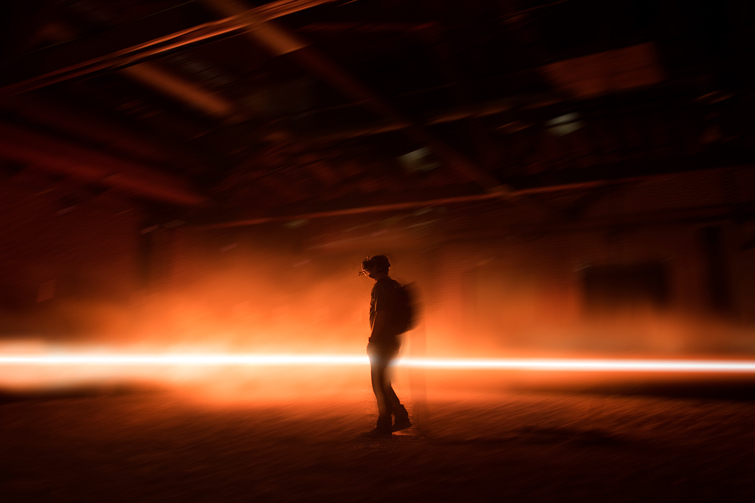
After removing his shoes and slipping on a virtual reality mask and bulky headphones, his mother’s experience became his own. But while she ventured thousands of miles over many days, Perez instead walked around a repurposed church in Washington, D.C. for six and a half minutes.
It was all part of CARNE y ARENA, translated to “flesh and sand,” the virtual reality brainchild of Academy Award-winning director Alejandro Iñárritu. Iñárritu, who is Mexican, used technology, film and physical effects, like sand and wind, to take visitors on their own border-crossing journey.
“It just shows… it’s not easy crossing the border,” said Perez. “There are consequences on the way: either death or you live.”
The experience is broken into three parts. Visitors first wait in a cold detention center. A sign on the wall, in Spanish and English, tells them to remove their shoes. After an alarm sounds, they proceed into a dark room with floors covered in sand. Wearing VR goggles, they become immersed in Iñárritu’s desert world.
Visitors are completely alone in the installation room, but they do not cross the border unaccompanied. They are joined by a group of holographic migrants. To create CARNE y ARENA, Iñárritu worked with immigrants who reenacted their own border-crossing experiences, not actors.
When a border patrol helicopter starts circling overhead, the migrants shout for everyone to “hide” and “get down.” Some visitors immediately drop to their hands and knees; others watch from the periphery, said Kristin Guiter, the installation’s local spokesperson.
As the scene unfolds, visitors experience moments reminiscent of the emotionally-charged viral images of families being detained at the border: A border patrol officer questions a child about their parents. A migrant woman cradles a sleeping baby. Holding their hands high above their heads, the men are separated from the women and children.
“In a way it gets you to understand, better than anything else, the reality of these people,” said Iñárritu during a discussion at The Phillips Collection, an art museum in D.C.
When the experience is complete, a photo gallery shows the real stories of the immigrants who participated in the project, as well as a border patrol agent who was haunted by what he saw on the job.
 Lindsay Maizland
Leave a comment