Explainer originally published on CFR.org in Spring 2019. Frequently updated.
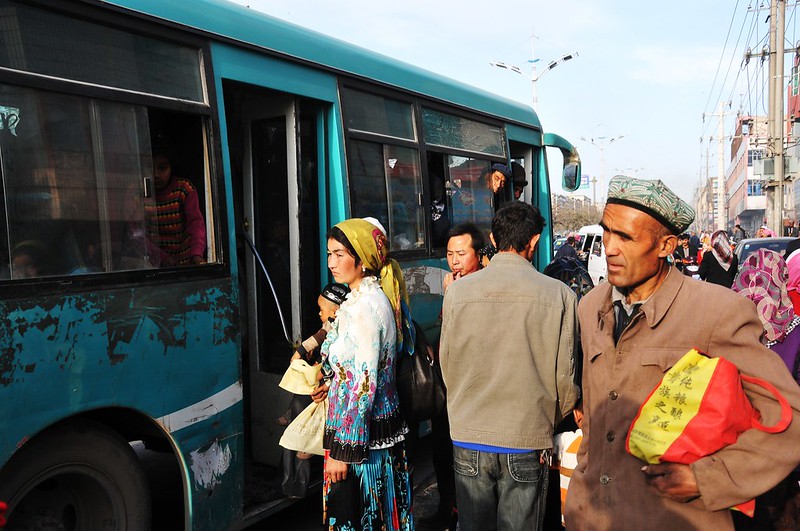
The Chinese government has reportedly detained more than a million Muslims in reeducation camps. Most of the people who have been arbitrarily detained are Uyghur, a predominantly Turkic-speaking ethnic group primarily from China’s northwestern region of Xinjiang.
Human rights organizations, UN officials, and many foreign governments are urging China to stop the abuses, which the United States has described as genocide. But Chinese officials maintain that what they call vocational training centers do not infringe on Uyghurs’ human rights. They have refused to share information about the detention centers, and prevented journalists and foreign investigators from examining them. However, internal Chinese government documents leaked in late 2019 have provided important details on how officials launched and maintain the detention camps.
When did mass detentions of Muslims start?
Some eight hundred thousand to two million Uyghurs and other Muslims, including ethnic Kazakhs and Uzbeks, have been detained since April 2017, according to experts and government officials [PDF]. Outside of the camps, the eleven million Uyghurs living in Xinjiang have continued to suffer from a decades-long crackdown by Chinese authorities.
Most people in the camps have never been charged with crimes and have no legal avenues to challenge their detentions. The detainees seem to have been targeted for a variety of reasons, according to media reports, including traveling to or contacting people from any of the twenty-six countries China considers sensitive, such as Turkey and Afghanistan; attending services at mosques; having more than three children; and sending texts containing Quranic verses. Often, their only crime is being Muslim, human rights groups say, adding that many Uyghurs have been labeled as extremists simply for practicing their religion.
Hundreds of camps are located in Xinjiang. Officially known as the Xinjiang Uyghur Autonomous Region, the northwestern region has been claimed by China since the Chinese Communist Party (CCP) took power in 1949. Some Uyghurs living there refer to the region as East Turkestan and argue that it ought to be independent from China. Xinjiang takes up one-sixth of China’s landmass and borders eight countries, including Pakistan, Kazakhstan, and Kyrgyzstan.
Experts estimate that Xinjiang reeducation efforts started in 2014 and were drastically expanded in 2017. Reuters journalists, observing satellite imagery, found that thirty-nine of the camps almost tripled in size between April 2017 and August 2018; they cover a total area roughly the size of 140 soccer fields. Similarly, analyzing local and national budgets over the past few years, Germany-based Xinjiang expert Adrian Zenz found that construction spending on security-related facilities in Xinjiang increased by 20 billion yuan (around $2.96 billion) in 2017.
 Lindsay Maizland
Leave a comment